Midnights: Taylor Swift’s Musical Cry For Help
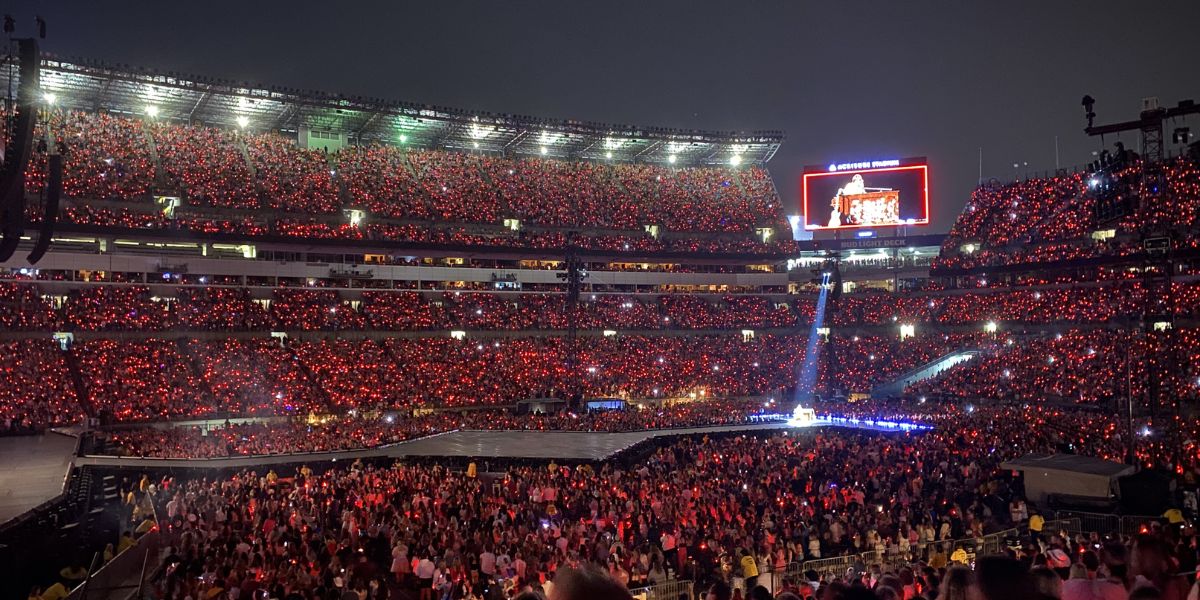
Midnights, Taylor Swift’s tenth studio album, explores thirteen sleepless nights and various emotional endeavors throughout different ages and periods in her life. For the first time in Swift’s discography, Midnights as an album embodies different emotions across different eras, with one thing in common thematically: the setting. Every song is set during the nighttime or is a reflection of something that happened during the nighttime. Midnights explores the guilt and shame within Swift's life, while also tying in the chaotic beauty of its magnetization. The thirteen songs on this album are not presumably in chronological order or have any blaring connections to each other; however, this could be theorized. An important motif in the songs on Midnights is that they are all some type of confession regarding love, revenge, depression, or loneliness. There is this sense of irreversible shame throughout the course of the album.
In literature, a poem that is set at night is called a nocturne. As stated by Edward Hirsch, a nocturne is consistently “bridging the relation between what is human and what is not human.” He describes midnight to be the beginning of “the witching hour” and when realities within the daytime are forgotten. Throughout Midnights, Swift uses this personification of midnight and nighttime as a place where she feels a range of emotions, as well as their highest intensity. While there is not musically or lyrically a supernatural element of Midnights, it does cause for curiosity why Swift has chosen this time of day to symbolize throughout her album. Four tracks on Midnights explore the different emotions that are depicted at night. Within these four songs, connections can be drawn for how Swift has allowed for such a nightmarish fog within her life.
Maroon
The second track on Taylor Swift’s Midnights is titled “Maroon.” “Maroon” follows the trajectory of a relationship during its time and after it has ended. The first verse begins with the lyric “when the morning came…,” following the first track, “Lavender Haze.” “Maroon” beginning with this lyric is extremely significant to the context of the album because of what it implies that the night signifies within Swift's life. This lyric implies that the speaker yearns for security, as expressed in “Lavender Haze,” In “Maroon,” Swift wrestles with the emotional turmoil of this wanted security. As spoken about in the context of a nocturne, morning and night as themes are treated as two separate dimensions with two different inherent realities. Similarly, Swift states in the bridge of “Maroon,” “I wake with your memory over me,” driving the idea that realities come into view once the speaker has awakened.
The first verse, pre-chorus, and chorus of “Maroon” all point towards a wondrous, flourishing relationship, starting the chorus with lyrics like “I chose you.” Beginning in the second verse, following the first chorus, there is an abrupt shift in tone and emotion. It is conveyed that the relationship has started to deteriorate irreversibly with lyrics like “how the hell did we lose sight of us again?” It is also implied that this deterioration has happened before. This itself is significant because “Maroon” is not the first song of Swift’s that is a color. Taylor Swift’s 2012 song, “Red,” explores similar aspects of a debilitating, yet mesmerizing relationship, comparing it to the color of red. The color of red is typically related to something dangerous or wrong, or opposingly, romantic or sexual natures. It is purposeful that Swift has used two very similar colors as titles for her songs because “Red” and “Maroon” are both the second tracks on their respective albums, Red and Midnights. Despite the bad part of the relationship that is portrayed in “Red,” Swift uses the color red to describe the loving parts of the relationship. This could not be more different in the context of “Maroon.” The reason that “Maroon” has its title is because the speaker no longer sees her love as red, but rather anything besides it. Swift lists off various colors and items that resemble the color of red, but ultimately cannot say the word, and instead, describes the relationship to be “maroon.” The other colors and/or items that Swift lists instead of saying “red” include “burgundy,” “wine,” “blood,” “scarlet,” “mark you saw on my collarbone” (presumably a hickey), “rust that grew between telephones,” “lips,” and lastly, “maroon.” The significance of not being able to say “red,” and ultimately saying “maroon,” is that the speaker is able to recognize a hypnotic love that was once there, but is irrevocably unrecognizable at this point.
As for the musical elements in “Maroon,” it begins with abrupt, sharp drums, signaling the rush of anxiety felt when waking up in the morning. There are wet guitar flips and a deep bass that compliment the sense of anxiety. Throughout the course of the song there is a rigid, falling note that sounds as if it is surging up and down. The surging note falls out of pitch just before the second verse to resemble the relationship’s continued deterioration. Harmony is first sung in the second chorus, leading to layered harmony during the list of red things, adding to the stylistic effect of a list. In the final chorus, Swift sings down the octave in an extremely low register for her, resembling her internal battle and inability to describe the relationship as “red.”
Anti-Hero
“Anti-Hero” is the third track on Taylor Swift’s Midnights and was the first single off of the album. “Anti-Hero” is a song in particular that villainizes the speaker. It is essentially a confession, with the lack of an apology, from the speaker of the album. Swift describes herself as “the problem,” while simply stating the lack of understanding why people like her. As a cracked open meaning, as stated by Victor Brobert, an anti-hero is "weak, ineffectual, pale, humiliated, self-doubting, inept, occasionally abject characters– often afflicted with self-conscious and paralyzing irony, yet at times capable of unexpected resilience and fortitude."
This track conveys the awareness that the speaker has about themselves, as well as the unhealthy implications of an insomnious lifestyle. Swift begins the first verse stating, “midnights become my afternoons.” This one of very few times during the album that Swift states “midnights” plural. This conveys that she is aware that her lifestyle is what is affecting her relationships and her own personal well-being. An anti-hero is not necessarily the villain of a story, but they are definitely not a beloved protagonist.
Despite the speaker's knowledge of the areas they fall short, there is a sense of undeserved cruelty that is explained in the bridge. The bridge shifts to a fabricated story from the future that Swift has dreamt about. The bridge states, “I have this dream my daughter in-law kills me for the money / She thinks I left them in the will / The family gathers 'round and reads it and then someone screams out / “She's laughing up at us from hell.” This bridge explains that while Swift feels sorry for the people who support her in her life due to its magnetization, it is also difficult to trust anyone close to her. It is important to consider why Swift openly conveys that she has had a dream because this reveals that when Swift is sleeping/dreaming, the dreams are unpleasant and replicate the intricacies of her trauma.
“Anti-Hero” begins with lone pop drums. Within this song, there are layers of dancy synths to distract from the true meaning of the song. The excited production is a juxtaposition from the depression and loneliness of the speaker. The muddy synths and drums resemble the messy life and mind that are depicted in the lyrics. The twinkling synths at the end of the chorus resemble the speaker's attempt to make up aesthetically for the areas that they fall short. In the bridge the synths pull back and reveal the bare bones of the production, also revealing the inside of the speaker’s mind. At the end of the bridge Swift states, “I'm the problem, it's me / It's me, hi, everybody agrees, everybody agrees.” At the end of the word “agrees,” Swift accents the “s” in “agrees” making a “ssssss” or snake-like sound. This accent is significant because of the motif that snakes played in her 2017 album, reputation. In “Anti-Hero” the snake sound represents her awareness that she is misunderstood.
Midnight Rain
“Midnight Rain,” the sixth track on Midnights and is also one where Swift villainizes herself. “Midnight Rain” is the only track on Midnights that has the word “midnight” in the title. While “Midnight Rain” is not a title track, it is the closest song on the album to a title track. “Midnight Rain” is about the internal battle of individual changes that occur while in a relationship. The male figure in this song is depicted as someone who is always happy and nice and is looking for someone to settle down with. The character that Swift portrays in this song is a brooding, yet ever-changing woman who prioritizes her career and fame over her mediocre relationships.
Swift describes the male figure as “sunshine,” while she is “midnight rain.” There is significance to the fact that she describes herself as “midnight rain” instead of just “midnight.” The fact that she describes herself as dark and stormy exemplifies the major differences between the couple. In the verses, Swift conveys the major differences in perspectives of the couple, stating, “My town was a wasteland / Full of cages, full of fences / Pageant queens and big pretenders / But for some, it was paradise.” This reveals the lack of awareness from the male figure of Swift’s inherent depression within the relationship. Swift ultimately states, “I broke his heart cause he was nice” at the end of the second verse, revealing the current state of the relationship. In the fourth verse Swift states, “So I peered through a window / A deep portal, time travel / All the love we unravel / And the life I gave away.” Through this lyric, it seems as if the speaker was aware of the differences the two would face as a couple, but chose to pursue the relationship anyway.
In the outro of “Midnight Rain,” Swift, once again, explains the current state of the relationship. It is revealed that the male figure only thinks about her “when [she’s] on TV,” and Swift only thinks about him on "midnights like this.” These lyrics first reveal the underlying superficiality of the male figure, but also the recurring fact that Swift cannot trust anyone, even her life partner at the time. Lastly, while Swift has been referring to herself as “midnight rain,” now she is blaming various midnights for her overactive thoughts about the male figure. This conveys that Swift is revealing that she is in complete control of herself and her fate and does not care about the implications of her actions or unfortunate circumstances. She is simply on autopilot during the nighttime, reliving uncomfortable and sickening past experiences, despite their implications on her mental health.
The first two choruses within “Midnight Rain” are Taylor Swift’s real vocal, but pitched down an octave. This resembles that during the relationship depicted in this song, the speaker was lying to themselves, pretending to be someone they are not. This pitched down vocal shows up numerous times throughout Midnights, repeating this same symbolism. Within the production, there is a reversing sound throughout the song that is meant to symbolize replaying moments of a relationship. In the first chorus, there is a beat drop on the word “pain” to accentuate the guttural agony the speaker is experiencing. In the third and final chorus, Swift’s “normal” vocal is featured as the way it was recorded, instead of the pitched down vocal. This resembles that the speaker has come to terms with the state of the relationship and is at peace with it.
Mastermind
“Mastermind” is the thirteenth and final track on the original release of Midnights. Mastermind is a confession from Swift to her partner that she orchestrated their meeting and falling in love, again tying in the idea that Swift is in complete control of her life, despite the known implications of her decisions. It is also theorized that Swift could be confessing to her fans instead of a lover, stating that she prioritized her career because it was the only way for her to not feel alone. This theory would make sense considering the context of “Midnight Rain.”
In the bridge, Swift states, “No one wanted to play with me as a little kid / So I've been scheming like a criminal ever since.” This confession explains Swift’s inherent bad decisions and actions that are portrayed in her lyrics. Swift confesses that she has always felt alone and will do everything in her power to not be alone, despite the high potential of a poor outcome. She describes herself as “Machiavellian.” This refers to the Italian Renaissance figure, Niccolò Machiavelli, known for his political philosophies. “Machiavellian” is used to describe devious ideas in order to gain power. Swift reveals at the end of the song, as well as the end of the album, that the person or persons she is speaking to knows that her decisions and actions are calculated and loves her for it. Despite Midnights ending with a particularly “happy” song in context with the rest of the album, it would be reckless to not think about how “Mastermind” fits into the puzzle of the rest of the songs discussed.
“Mastermind” begins differently than any other song on Midnights. “Mastermind” begins with an arpeggio, resembling not only the complexities of the speaker's life, but also her ability to control it. The beat begins right on the first vocal, furthering a sense of control and calculation. Strings start to play before the second chorus, adding an element of warmth to the production. For the first time in the bridge, the chords get sixteen beats, dragging out the agony and fear of the speaker. This is significant because lyrically this is when the speaker is most vulnerable. The song closes with the strings playing and then each one ending or fading out at different times, symbolizing the need for control and lack of it.
Connections
When comparing “Maroon” to “Midnight Rain,” it could be assumed that the two songs are about the same person, while “Midnight Rain” is just the lesser of two evils, at least when considering Swift’s mental health. “Mastermind” could potentially fall as the initial meeting and feelings of the couple, while followed by the vigorous depression state that Swift is in during “Maroon” and the subsequent apathy felt in “Midnight Rain.” “Anti-Hero” plays the role of understanding past mistakes or bad decisions and taking accountability for them. One of the most intriguing characteristics about Midnights is the gaps and mysteries that it creates with its storyline as a concept album. The abrupt shifts in emotion throughout this album symbolize how not only the most honest, regretful, and reminiscent thoughts prevail at night, but that the deepest traumas manifest at night as well
Works Cited:
“A Thematic Exploration of “Midnights.” Absoludicrous Blog, 2024. https://absoludicrousblog.wordpress.com/2024/02/25/a-thematic-exploration-of-midnights/
Carlin, Shannon. “Let’s Break Down the Easter Eggs and Influences of Taylor Swift’s Midnights.” Time, 2021. https://time.com/6223793/taylor-swift-midnights-album-takeaways/
Elliot, Andrew J. and Maier, Marcus A. “Color and Psychological Functioning.” Current Directions in Psychological Science, Vol. 16, No. 5, pp. 250-254, 2007. https://www.jstor.org/stable/20183210
Harding, Charlie and Sloan, Nate and Cruz, Reanna. “How Midnights Sonically Convinces Us That Taylor Swift Actually Broke Curfew.” Vulture, 2022. https://www.vulture.com/article/taylor-swift-midnights-switched-on-pop.html
Hirsch, Edward. “Nocturne: Explore the glossary of poetic terms.” Poets.org. A Poet’s Glossary. https://poets.org/glossary/nocturne
Neimneh, Shadi. “The Anti-Hero in Modernist Fiction: From Irony to Cultural Renewal.” Mosaic: An Interdisciplinary Clinical Journal, Vol. 16, No. 5, 2007. https://www.jstor.org/stable/44030709
Pilat, Dan and Krastev, Sekoul. “Niccolò Machiavelli: Why good politicians can’t always be loved.” The Decision Lab, https://thedecisionlab.com/thinkers/political-science/niccolo-machiavelli
Annah Marcelle, Singer-Songwriter, Performing Artist
Annah Marcelle is an aspiring musical artist with more than twenty original songs on digital streaming platforms. She has been writing and recording music since the age of 16 and has worked closely with several up-and-coming music producers.

Previous Posts
Midnights: Taylor Swift’s Musical Cry For Help
February 25, 2026
Taking the Last Flight with Lainey Dionne
April 14, 2025
Get to Know Mikaela Ayira: Top 20 Finalist on The Voice
February 20, 2025
Haley Bundy: From Small-Town Ohio to Nashville's Music Scene | An Exclusive Interview
August 28, 2024
An Interview with Scarlet Tantrum: From Shy Beginnings to Emotional Powerhouse
June 24, 2024
Introducing Katie Klein: A New Voice in Indie Music and Songwriting
June 13, 2024
Julia Golden: Rising Singer-Songwriter from North Carolina
May 28, 2024
Discovering Clare Cunningham: An Inspiring Journey of Music, Faith, and Mental Health Advocacy
May 23, 2024
Karra Rhodes: A Rising Star in Country-Pop Music and Songwriting
May 22, 2024
Life on Mars - Taking Off with Singer/Songwriter Annah Marcelle
April 25, 2024
Setting Up Your Home Recording Studio: A Comprehensive Guide (Part 2)
December 23, 2023
Essential Equipment for Your Home Recording Studio: A Comprehensive Guide
November 9, 2023
Featured Videos
Annah Marcelle - Aftermath (Lyrics)
Zayn + Taylor Swift - I Don't Wanna Live Forever (Annah Marcelle Cover) #taylorswift
Annah Marcelle - If I Don't Call Him (Totally Unofficial, Just-for-Fun Music Video)
Annah Marcelle - What I Remember (Official Audio)
Gracie Abrams - Risk (Annah Marcelle Cover) #gracieabrams #coversong